

Applying sealant to the home during decoration is an essential task, as many areas need to be sealed during the decoration process. By applying sealant, the gaps can be filled completely to prevent water leakage, mold growth, and dirt accumulation. Applying sealant is a small detail in the decoration process. Many first-time decoration enthusiasts do not know where to apply sealant and what kind of sealant to apply. Today, we will explain it to everyone in one go.
There are two main types of sealants used for home decoration: beauty sealant and glass sealant. Their characteristics are different, and the places they use are also different.
Beauty glue is usually a type of sealant with good flexibility and weather resistance. After curing, it has a certain degree of elasticity and can deform with the expansion and contraction of the material, making it less prone to cracking. The color of beauty glue is diverse and uniform, and it can usually match various decoration styles and material colors. One of its design purposes is to beautify the gaps, making them look cleaner and more delicate.
The main components of glass adhesive are sodium silicate (Na2O · mSiO2), acetic acid, and organic silicone. It has strong adhesion, but its elasticity and stain resistance are generally not as good as beauty adhesive. Glass glue has relatively few colors, with common basic colors such as transparent, white, and black. In terms of decorative effect, it mainly serves as a simple filling and sealing function.
Where do I need to apply sealant? What kind of sealant should be applied?
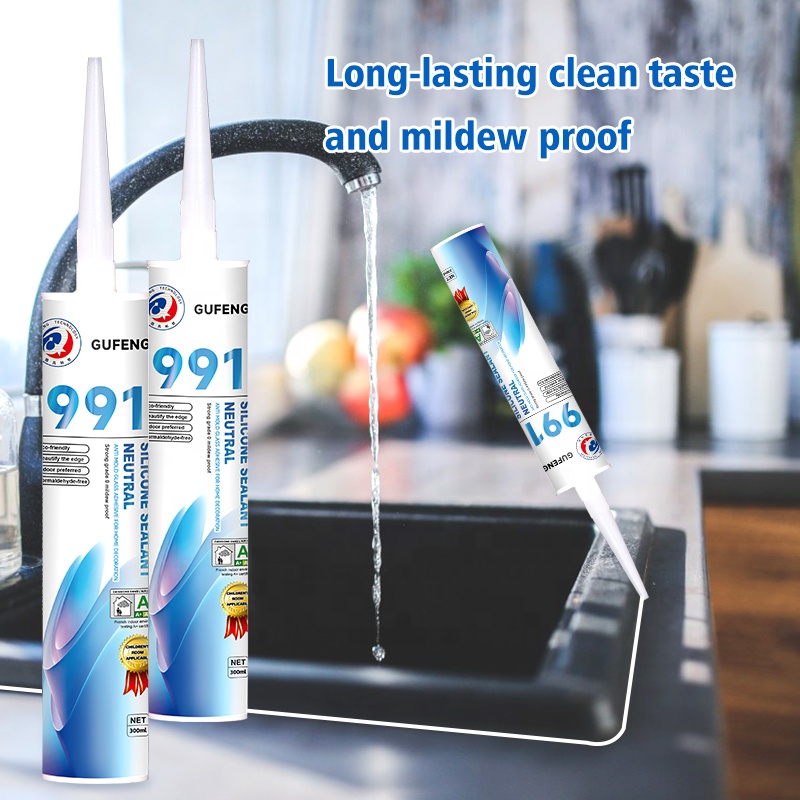
- Kitchen countertop (coated with anti mold glass glue)
Regardless of whether the kitchen countertop has a water stopper, a circle of sealant needs to be applied. If sealant is not applied, oil fumes, water stains, and dust from cooking in the kitchen will accumulate in the gaps. Over time, the more they accumulate, the more mold and bacteria will grow, and the gaps will become hygiene blind spots that are difficult to clean. And ordinary sealant cannot be used in the kitchen, as it is prone to mold, yellowing, and blackening. Be sure to use formaldehyde free anti mold glass glue, which is environmentally friendly, waterproof, and anti mold, making it easier to use. Anti mold grade: Buy strong anti mold glue with a high anti mold ratio, the higher the ratio, the longer the anti mold time. When applying glue, it is important to note that the gaps between kitchen countertops should not be sewn with beautiful seams, as they lack toughness after curing and are prone to cracking and falling off.
- Toilet shower outlet (coated with anti mold glass glue)There is a gap between the shower outlet on the bathroom wall and the ceramic tiles. If no sealant is applied, water will flow into the sand and dust layer through the gap in the later stage. The sand and dust layer will be in a damp state for a long time, which will lead to a decrease in the bonding strength of the sand and dust, and there is a risk of hollowing and falling off the ceramic tiles. So after the bricklayer is finished, it is necessary to apply anti mold glass glue. In case of water leakage, it can also prevent water from entering the sand and dust layer and causing unnecessary losses.
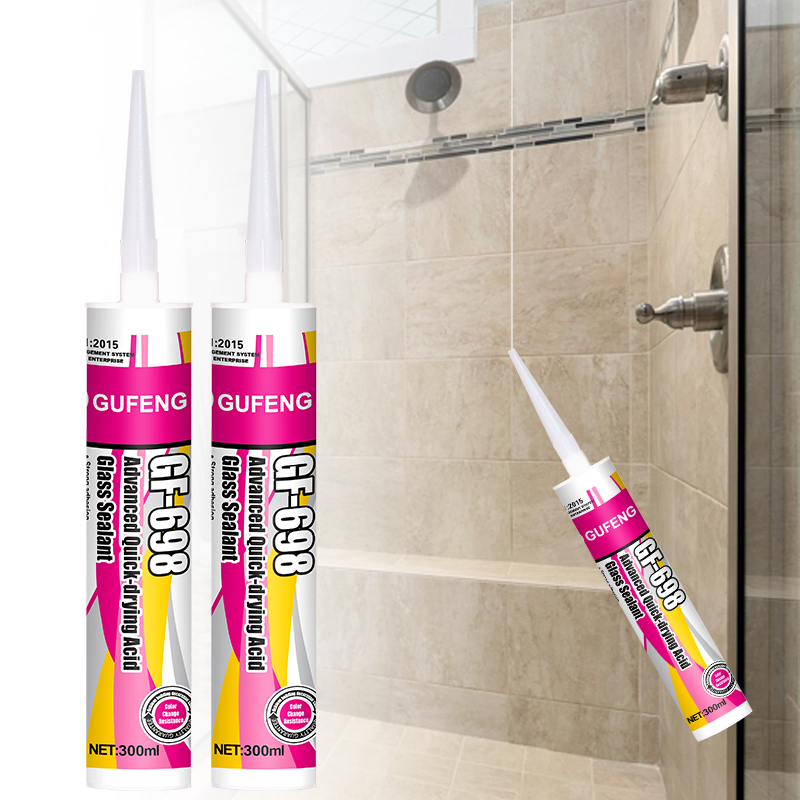
- Apply glue around the window frameBecause glass glue has shrinkage, when combined with latex paint, it will crack the latex paint tape after shrinkage. After the installation of the window, apply glass glue to the junction between the window frame and the tiles to make it more secure, prevent air and rain leakage, and also serve as a shading effect. The glass glue for window closure is usually applied by the window installer, and other glue applicators are not as good as them.
- Make a circle around the door frame (beauty glue)After installing the door at home, there are gaps between the door frame and the latex paint on the wall. Some people choose to use latex paint to fill the gaps, but over time, the door frame will vibrate and the latex paint is prone to cracking. So it is more suitable to use beauty glue at the junction of the door frame and latex paint wall.
- Kicking line and bottom (applying beauty glue)All the skirting boards at home should be coated with beauty glue to prevent water from entering the wall through the gaps of the skirting boards, causing mold and peeling on the wall. When playing, be careful to apply white or a color similar to the skirting board on top, and remember to apply transparent beauty glue to the area where the tiles meet below for better visibility and less abrupt appearance.
- Bathroom countertop (coated with anti mold glass glue)The bathroom cabinet uses water for a long time, and if it is not glued around, it is prone to water leakage. Being in a humid environment for a long time can easily lead to the growth of bacteria. So a circle of glass glue should also be applied between the bathroom cabinet and the wall tiles, and it should be anti mold and waterproof. Poor quality glass glue is prone to yellowing and mold growth, and it won't last long.
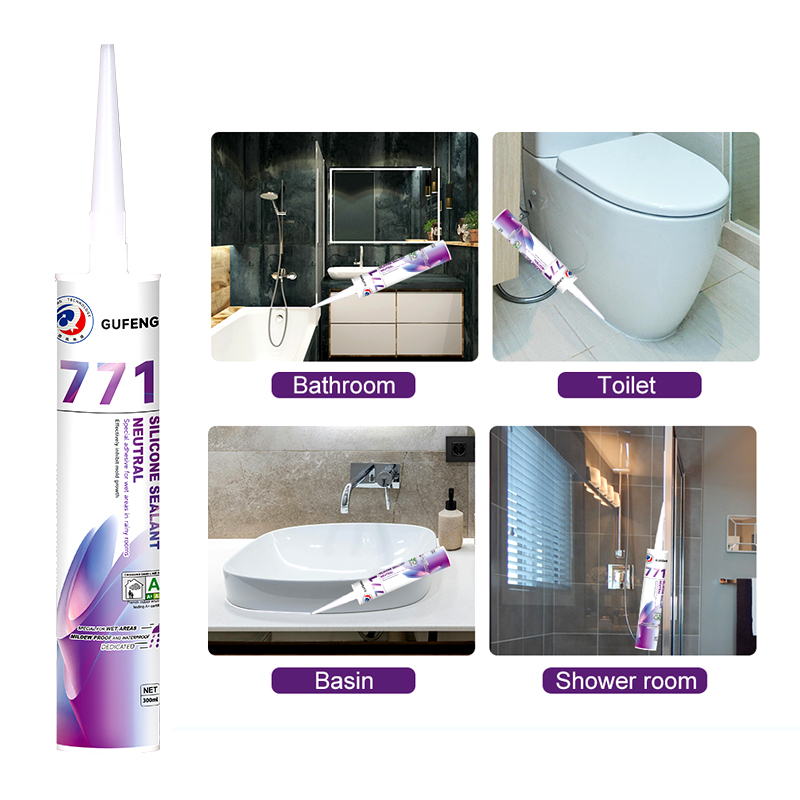
- Around the bottom of the toilet (apply glass glue)Apply a circle of glass glue between the toilet and the floor, just like applying glue to bathroom cabinets, choose anti mold glass glue. Applying ordinary glass glue can easily cause yellowing, blackening, and mold growth. Glue is applied to make the toilet and floor more secure, and to prevent water from entering the bottom of the toilet and growing bacteria.
You must apply the correct sealant to these 7 areas of your home in order to make it better to live in.
Have you learned?
Company website: www.gfkjgs.com